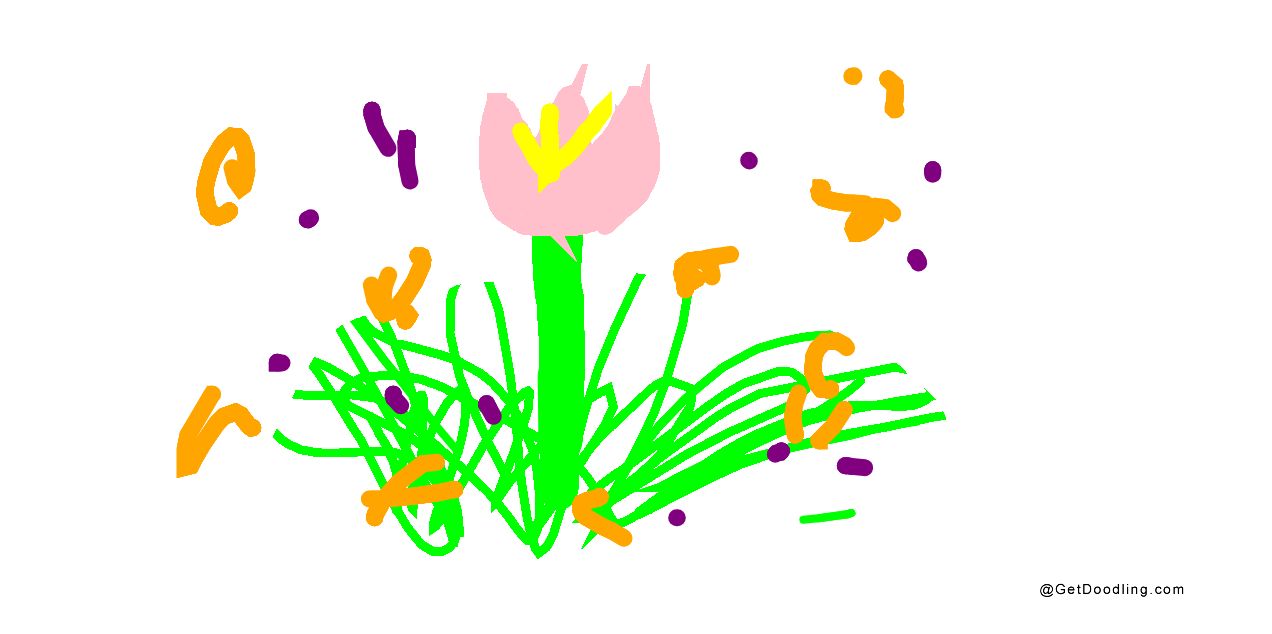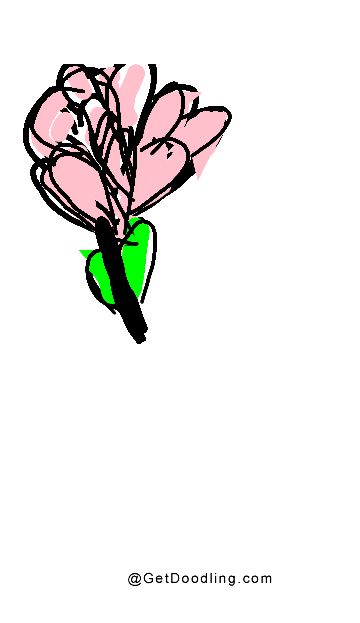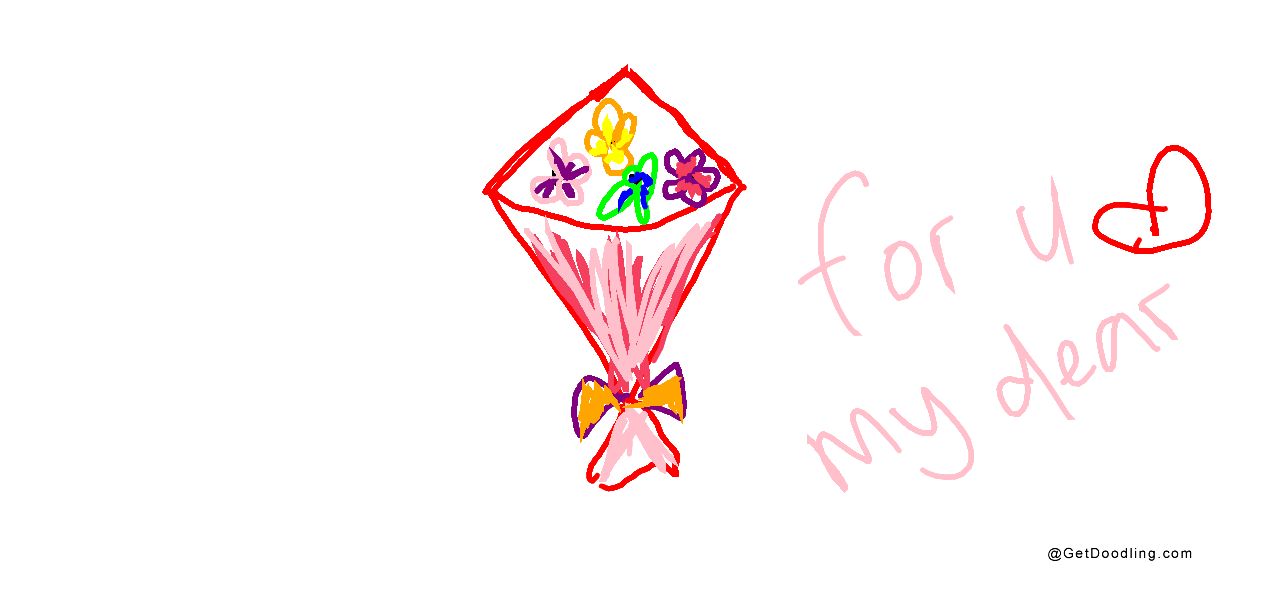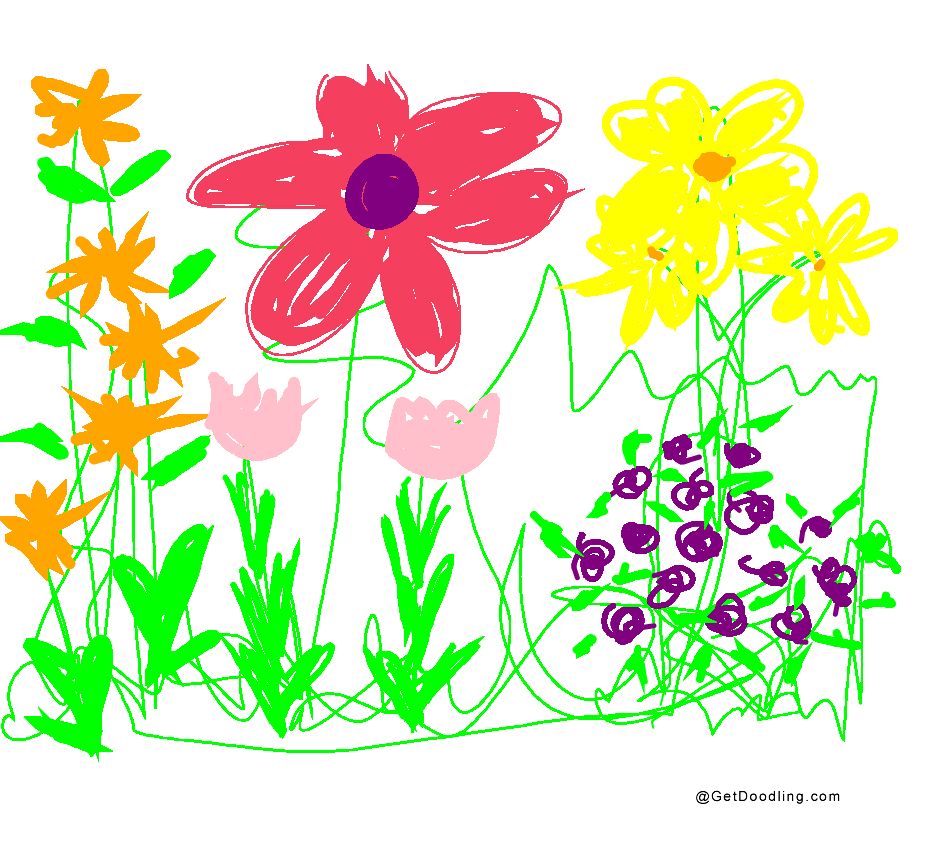
Flower Drawing
How to draw a flower — a simple five-petal bloom, a rose, or a whole bunch — plus a free board to practise on right now.
A flower is the easiest thing on this site to draw, and that is not a compliment to your skills — it is the shape itself. Almost every flower is built the same way: a small centre with petals arranged around it, like spokes on a wheel. Draw a circle, add a few curves around it, and you have a flower. Nothing else you can draw gives you that much for so little.
That is why the drawing starts from the middle. Most people try to draw a flower by outlining the outside edge first, and that is the one approach that makes it hard — you end up committing to a symmetrical outline before you have drawn anything, with nowhere to hide a wobbly line. Start with a small circle in the centre instead, and every petal you add after that has something to sit against.
The second habit worth breaking is drawing petals as pointed triangles. A petal is a curve that bulges outwards and comes back — closer to a wide U than to a spike. Triangles give you a star, which is why so many early flower sketches look like a star rather than a flower. Round the outer edge and the same five shapes turn into a bloom.
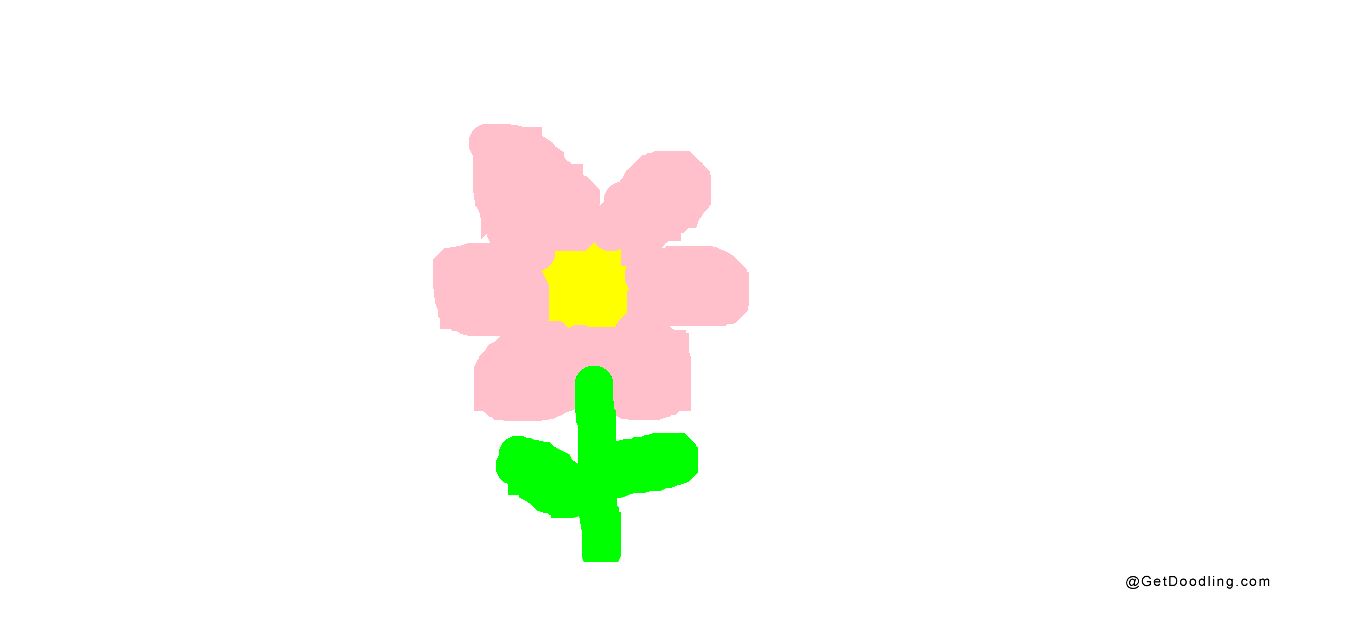
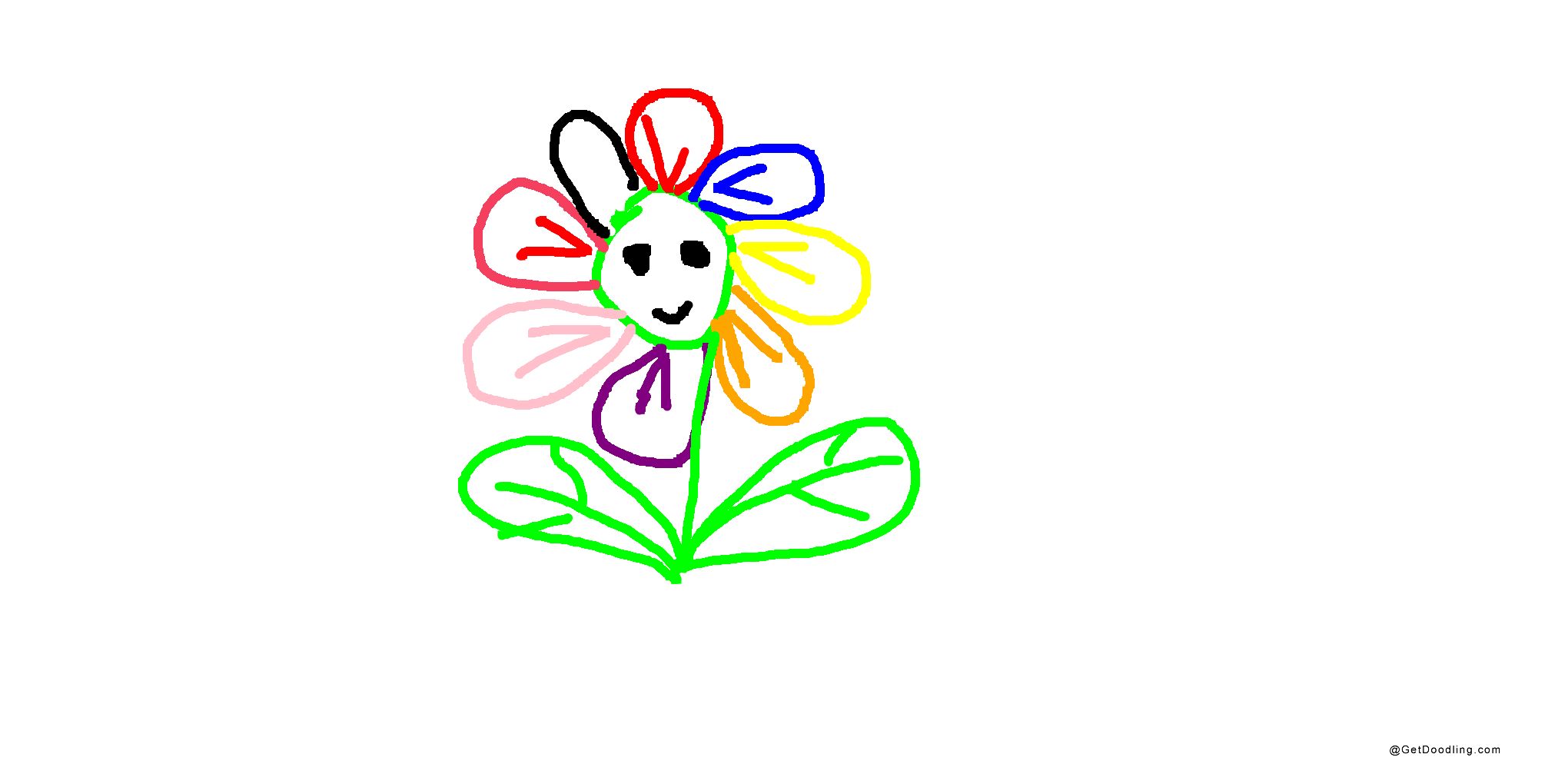
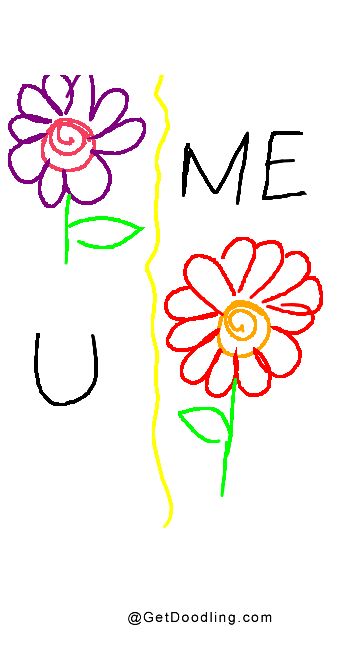
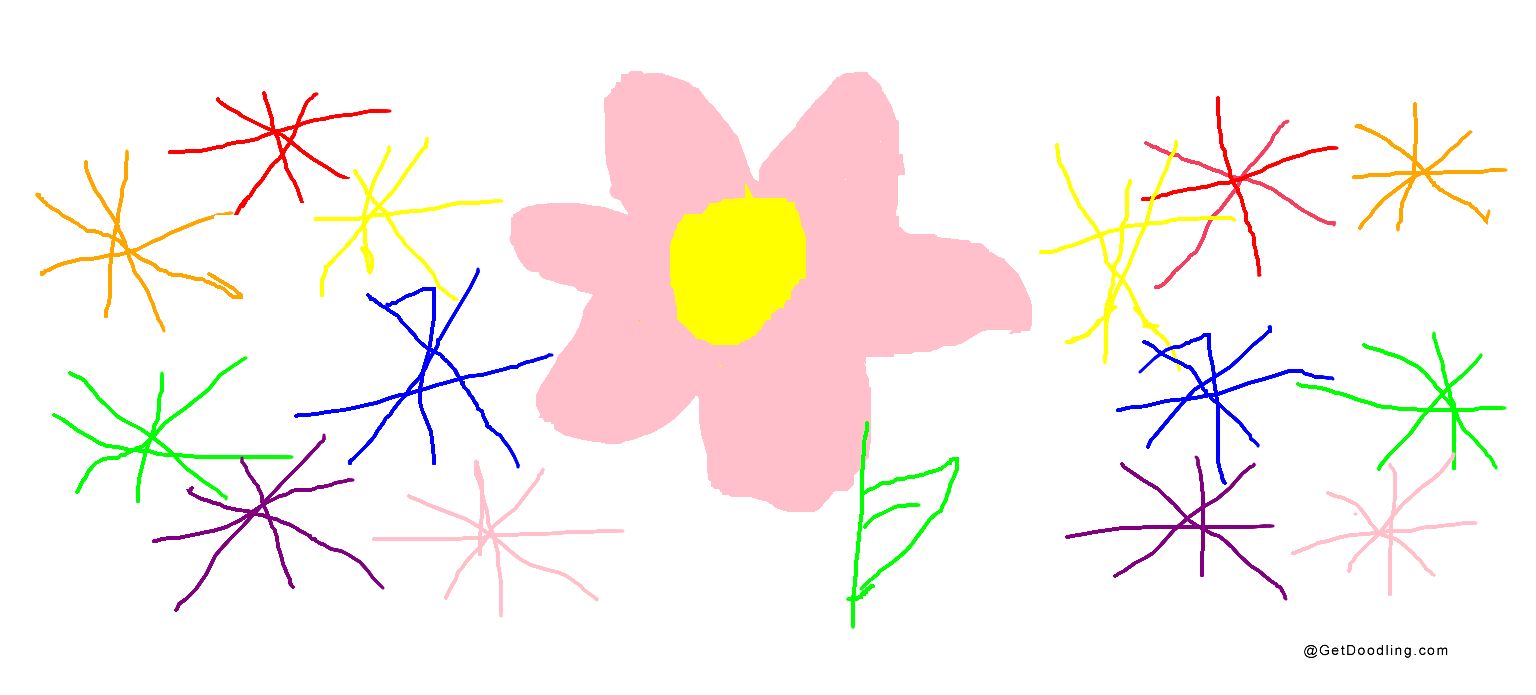
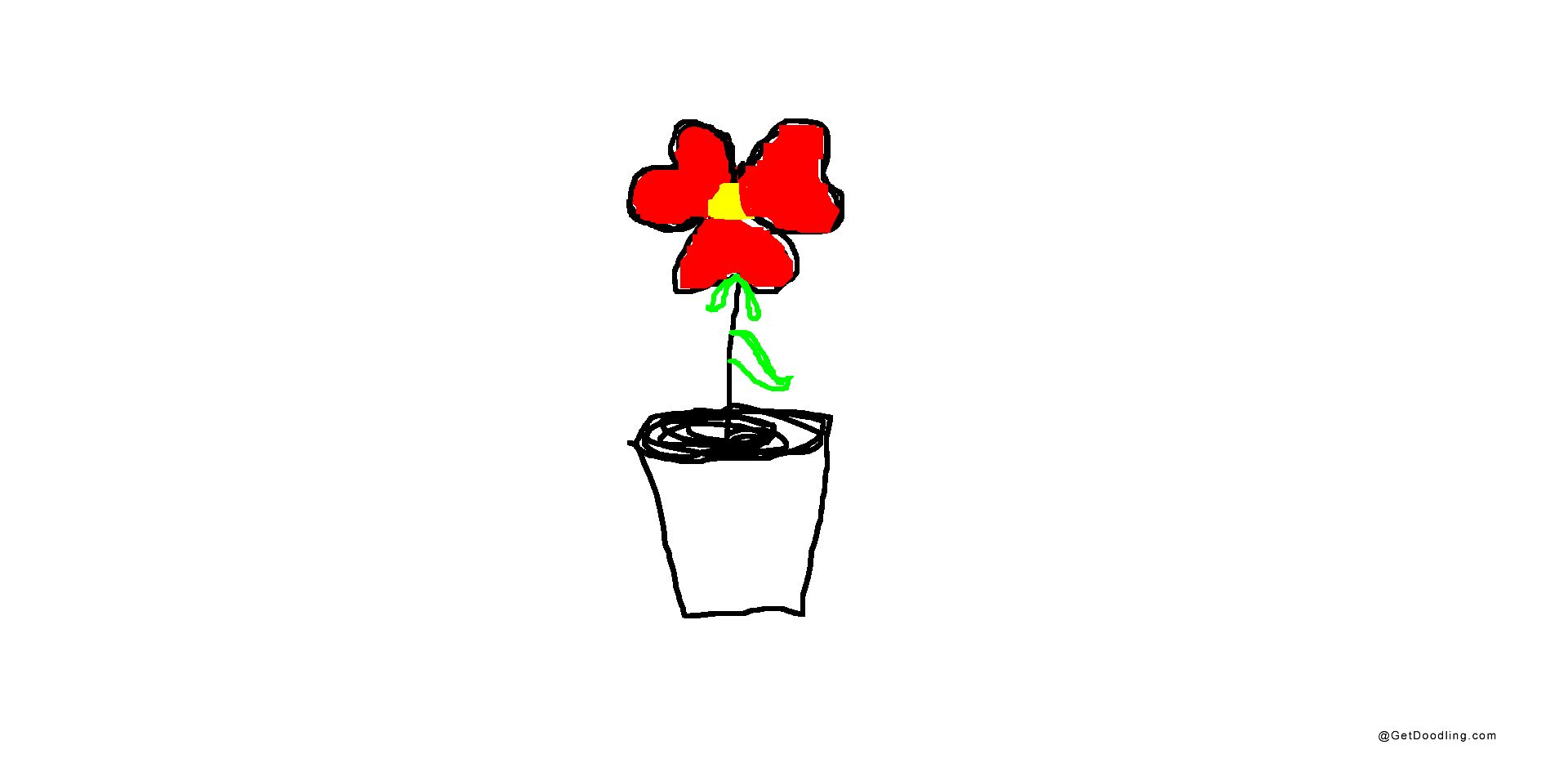
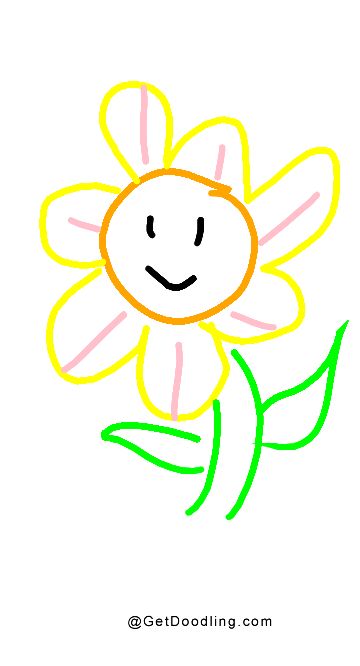
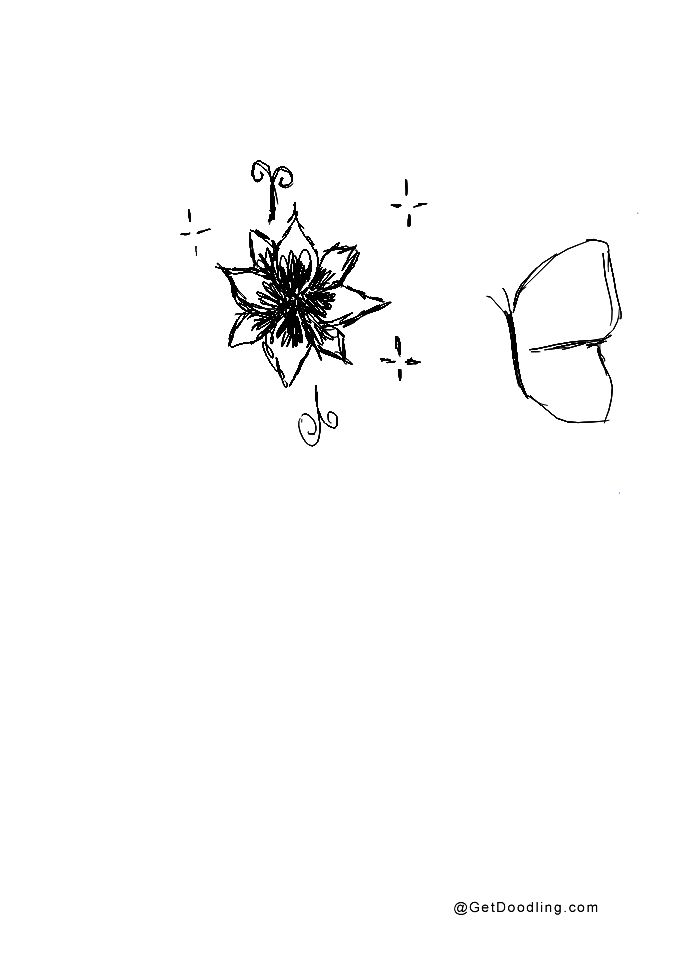
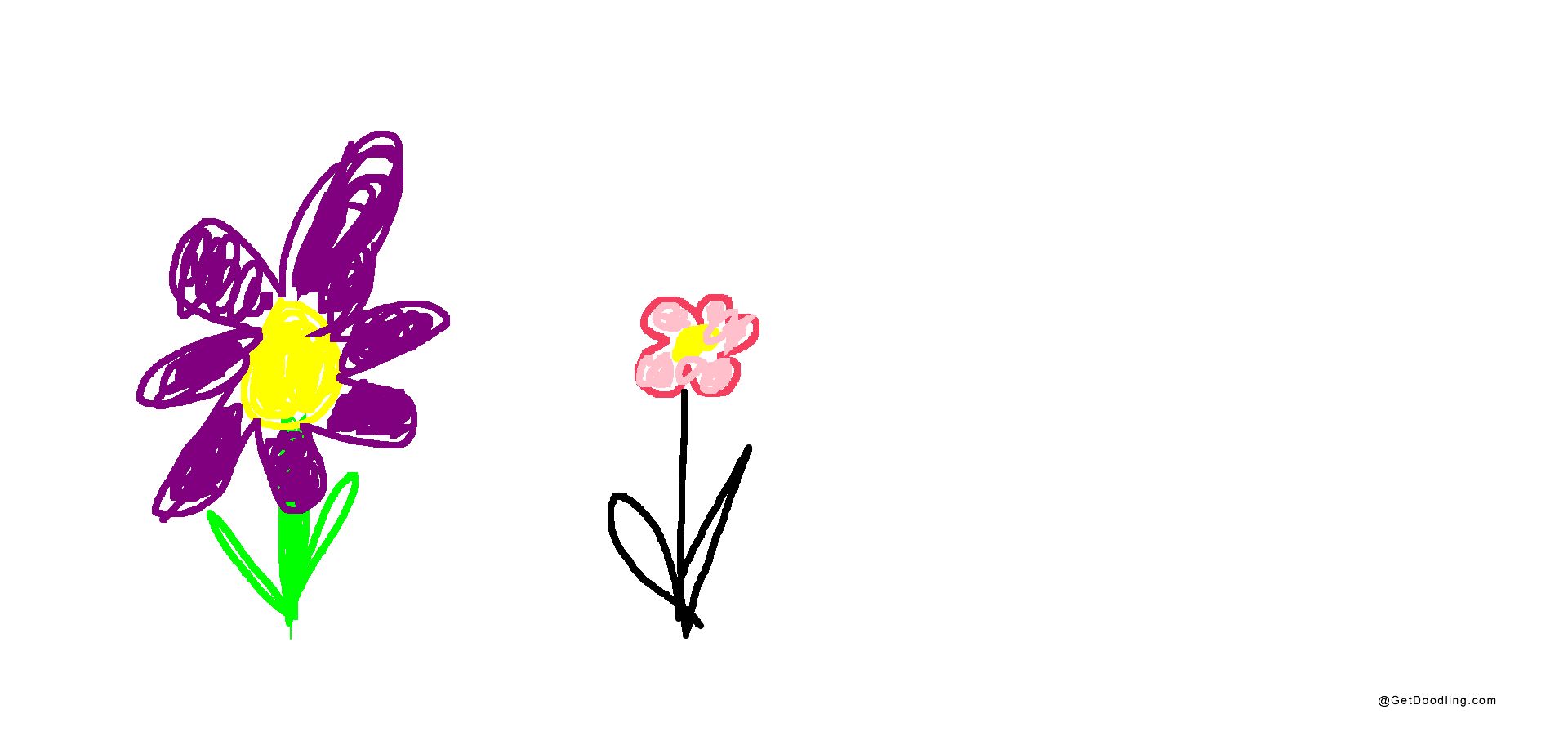
For an easy flower drawing, keep it to the centre, five petals, a stem and two leaves. No shading, no detail in the middle, no attempt at realism. A simple flower drawing and a cute flower drawing live in the same place: a round centre, generous petals, a short stem. A beautiful flower drawing does not need more shapes either, just more care about where the petals overlap — and a flower doodle is the same drawing done in a single loose line.
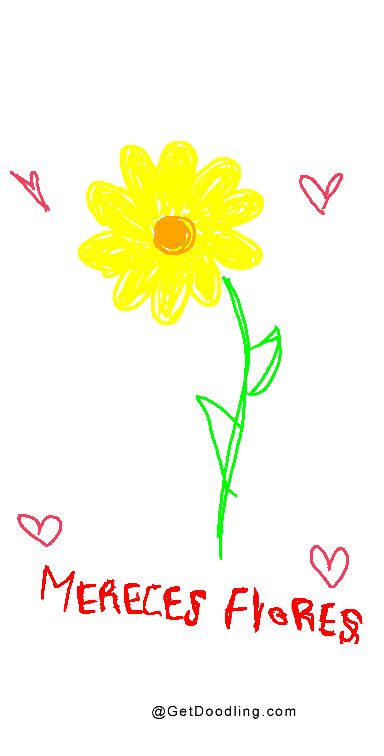
Once you know the skeleton, changing the petals changes the flower. A tulip is the same circle with petals that fold inwards and stay closed. A daisy is the same circle with long thin petals. A sunflower is the same circle with many narrow petals packed around a much larger middle. A cherry blossom is the same circle with a tiny notch cut into the tip of each petal. Realistic flower drawing goes further — petal edges curl, the centre shows depth, and light comes from one direction — but it is the same starting circle underneath.
You do not need anything to start. The board on this page opens in your browser, and you can draw with a mouse, a finger or a stylus. There are ten brush sizes and ten colours, and white works as an eraser on the white canvas — worth remembering the first time a petal goes the wrong way. When your flower is finished, save it to your device as a PNG, or share it to the gallery so other people can see it.
Below are the steps for a simple flower, a separate section on drawing a rose, the things that make a flower sketch look better, and answers to the questions people ask most.
How to Draw a Flower in 5 Steps
-
Draw a small circle for the centre
Put a small circle in the middle of your canvas — roughly the size of a fingertip. Keep the line light, because everything else is measured from this one shape. Five petals need to fit around it, so if it looks too big now, it is too big.
-
Add five petals around it
Starting from the edge of the circle, draw a curve outwards and bring it back — a wide U rather than a triangle. Each petal should be about twice as long as the centre is wide, and no two petals need to be identical. Leave a little space between them.
-
Fill the gaps with a second layer
In the spaces between your five petals, add three or four more, each one starting from behind the first layer and curving out in the same direction. These do not need to be complete — the point is to make the flower look like it has depth rather than like a flat badge. This step is what separates a flower drawing from a flower symbol.
-
Add the stem and two leaves
From the bottom of the flower, draw a slightly curved line downwards for the stem. Then add two leaves on opposite sides, at different heights, each shaped like a long oval with points at both ends. A single line down the middle of each leaf is enough to suggest a vein.
-
Add the detail in the centre
Finish with the middle: a small spiral, or eight or ten short strokes radiating outwards for the stamens. Then look at the whole drawing and soften anything that looks too regular — a flower with perfectly even petals looks fake, and an uneven one looks like it grew.
How to Draw a Rose
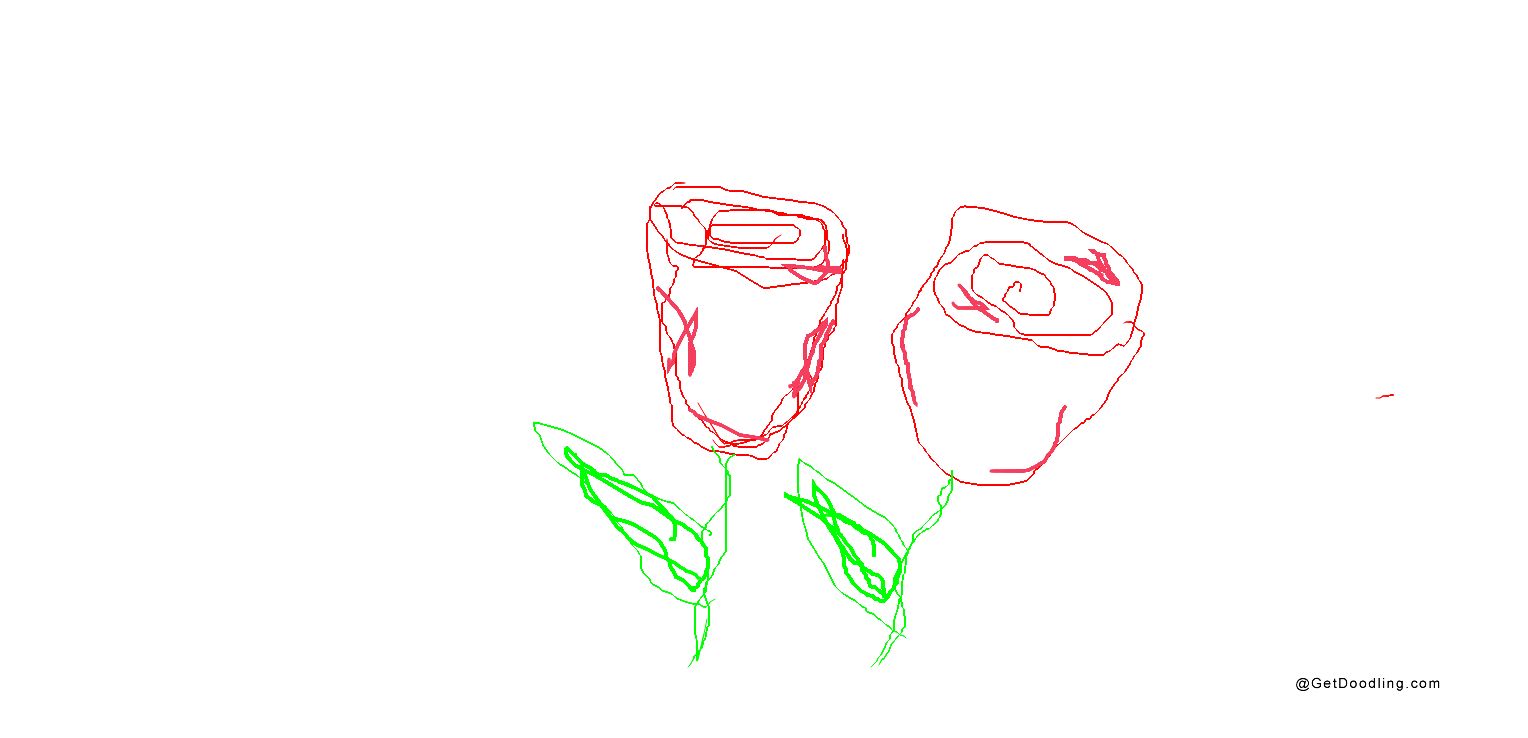
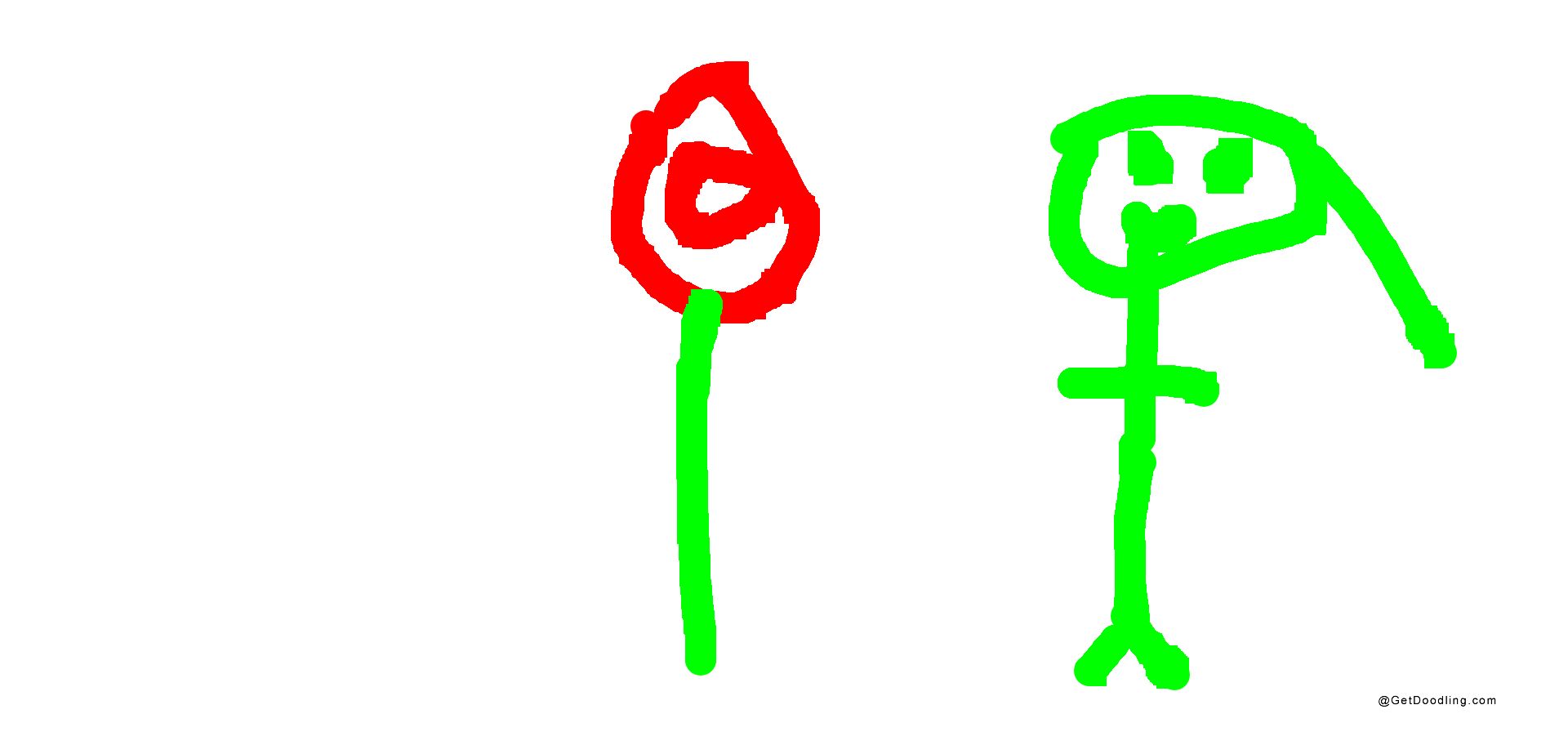
A rose is not a five-petal flower, and drawing it the same way is why so many rose sketches end up looking like a daisy. A rose is built from the middle outwards in a spiral, with each layer of petals wrapping around the one before it.
Start with a tight centre
Draw a small circle, then a spiral line inside it that curls in on itself, about one and a half turns. This is the heart of the rose, and it stays small — everything else grows around it.
Wrap the inner petals around it
Following the outside of the spiral, draw small arcs that hug it, each one overlapping the last like a hand cupping something. Keep them tight and short at this stage. The arc opening should face outwards, never inwards, or the petals look folded the wrong way.
Add the outer petals larger and looser
As you move outwards, make each petal bigger and less symmetrical, with a rounded, slightly wavy edge. Two or three rings are enough. The outer petals are the ones that give the rose its shape, so let them open up — a rose in full flower has petals that have relaxed outwards.
Finish with the leaves and the stem
Rose leaves grow in threes and fives along the stem rather than singly, and each leaflet has a serrated edge — a few small bumps along the outline read as a rose leaf where a smooth oval reads as a generic one. A curve of stem with two or three short lines across it suggests the thorns without needing to be drawn literally.
If it looks like a cabbage
That happens when the outer petals are too neat and all the same size. Break the outline: make one petal larger, let another curl back on itself, and overlap two so one partly hides the other. Roses look irregular because they grow that way. Draw two roses at different stages of opening and the pair will read better than either one on its own.
Flower Drawing Tips
Start from the centre, always
Whether it is a daisy, a rose or a sunflower, the first mark is a small circle in the middle. Drawing the outline first is the one habit that makes flowers hard, because you are committing to a shape before you know where the petals go. Centre first, petals second, stem third — that order works for every flower you will ever draw.
Petals are curves, not spikes
If your drawing looks like a star, this is the reason. A petal bulges outwards and comes back — wide and rounded at the tip, closer to a sideways U than to a triangle. Keep the outer edge soft, and the exact same five shapes turn into a flower instead of a star.
Overlap beats symmetry
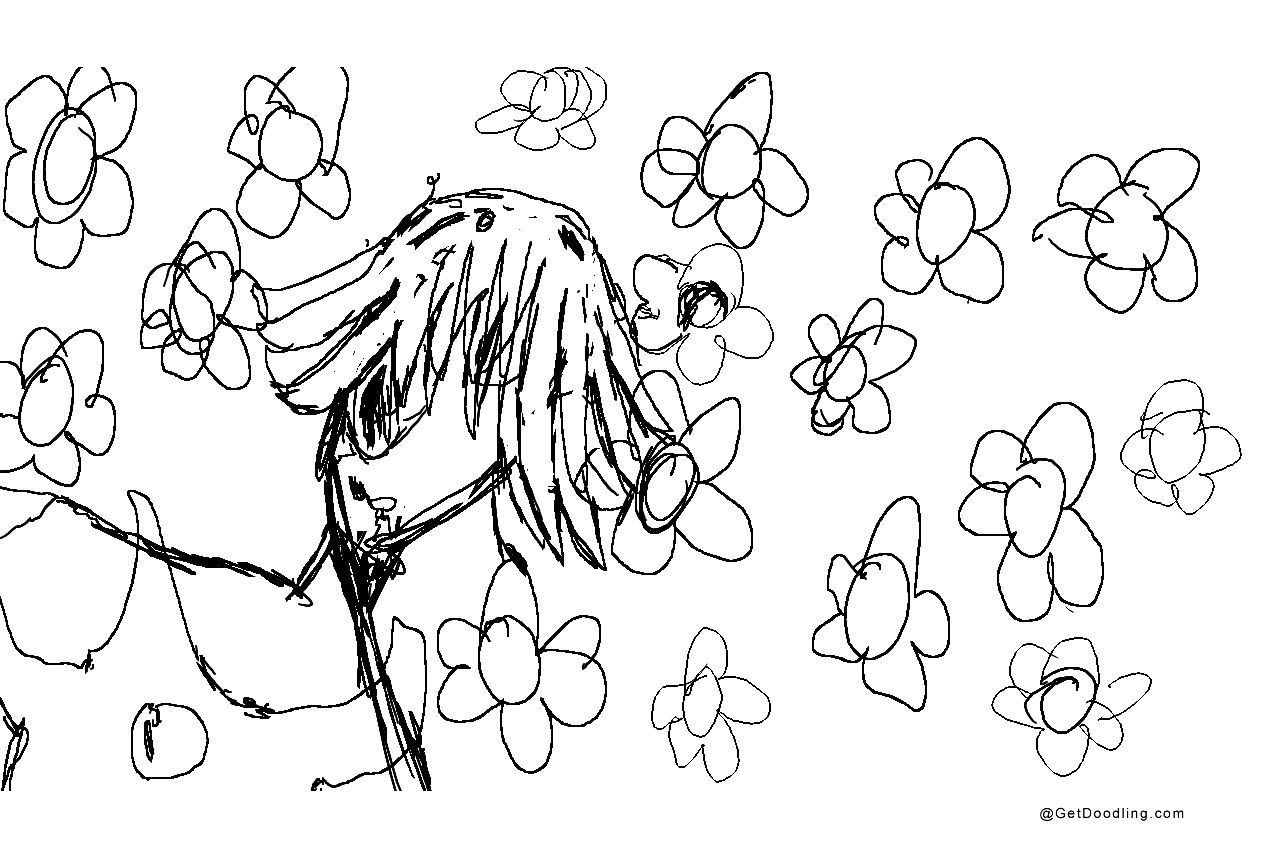
A flower with five identical petals, evenly spaced, looks like a logo. Real flowers have petals that push against each other, some hidden behind the ones in front. Add a petal that partly covers another and the drawing gains depth without gaining detail. This is most of the difference between a flower sketch that looks drawn and one that looks printed.
Break the outline
A flower drawn inside a perfect circle looks manufactured. Once your petals are in place, go round the outside and change it on purpose — push one petal further out than the others, pull another in, and let the tip of a third curl back on itself. Real petals are not the same length and they do not line up. Ten seconds of making the outline less tidy is what makes the finished drawing look like something that grew.
Shade from one side
Pick a single direction — light from the top left, say — and keep every shadow on the same side of every petal. Shade where a petal meets the centre and where one petal sits behind another. Two tones are plenty: one for the shadows and the white of the page for everything else. A realistic flower drawing is mostly this, plus a slightly darker centre, not more detail.
Flower Drawing FAQ
How do you draw a flower step by step?
Small circle for the centre, five curved petals around it, a few more petals in the gaps, a stem with two leaves, then detail in the middle. Five stages, and the first one — a light circle — decides where everything else goes. Draw the whole thing in that order and you will never end up with petals that do not fit.
How do you draw a simple flower?
Centre, five petals, stem, two leaves — and stop there. A simple flower drawing and an easy flower drawing are the same thing, and neither needs shading or detail in the middle. For a cute flower drawing, make the centre rounder and the petals fatter and closer together, and skip the stem entirely. A flower doodle is this same drawing done in one continuous loose line, without lifting the pen.
How do you draw a rose?
A rose is a spiral, not a circle of petals. Start with a small centre and a line that curls around inside it, then wrap short arcs around that spiral, each petal overlapping the last. As you move outwards, make the petals bigger and looser, and let the outer ones open outwards. An easy rose drawing is simply one with two rings of petals instead of four.
How do you draw a sunflower?
The same method as any other flower, with two changes: a much larger centre, and many narrow petals packed tightly around it. Draw the centre first and make it big — a sunflower is mostly middle. A daisy works the same way with a smaller centre and longer, thinner petals, and a cherry blossom is a five-petal flower with a small notch cut into the tip of each petal.
Why does my flower look like a star?
Because the petals were drawn as points. A petal is a curve that bulges out and comes back — wide and rounded at the tip — not a triangle. Round off the outer edge of each petal and the same five shapes stop looking like a star and start looking like a flower. If it still looks wrong, the petals are probably too evenly spaced: push two of them closer together.